
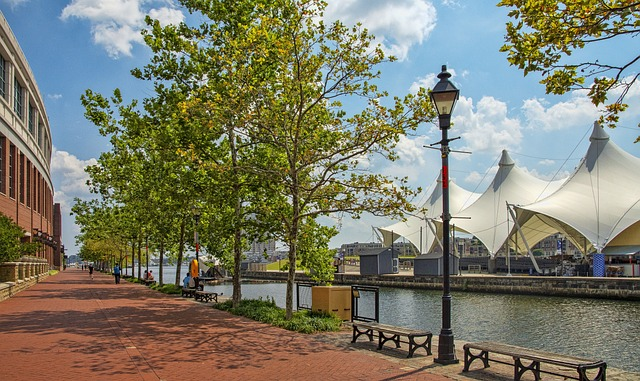
If you are shopping for rental properties in Baltimore in 2027, the gap between a block generating steady cash flow and one that erodes your return can be a single street — here is what the data shows about where investors are finding the best opportunities. This guide profiles seven neighborhoods using published pricing, rent, and redevelopment data rather than recycled generalities, mixing established waterfront markets with one emerging area backed by active city and state investment.
The entries below use published market data or documented redevelopment activity where available. Where a neighborhood has momentum but no published pricing yet, that gap is stated plainly rather than filled with a guess.
Key Takeaways
- The city’s real property tax rate is $2.248 per $100 of assessed value for fiscal year 2025, a real carrying cost for buy-and-hold investors.
- Harbor neighborhoods (Federal Hill, Canton, Fells Point) cluster in a $350,000 to $650,000 price band with estimated 4% to 6% cap rates.
- University and medical corridor neighborhoods like Hampden run cheaper, with an estimated 5% to 7% cap rate in that segment.
- State housing officials made $30 million in funding available to groups redeveloping neighborhoods with heavy vacancy, on top of a separate $20 million initiative covering 83 projects.
- Baltimore City’s population was estimated at 569,997 in mid-2025, down 2.7% from the 2020 base, which keeps citywide demand growth modest even where specific blocks are heating up.
Baltimore’s best neighborhoods to invest in for 2027 include Canton, Federal Hill, Fells Point, Mount Vernon, Hampden, Pigtown, and Johnston Square. Median prices range from roughly $176,000 in Pigtown to $650,000–$800,000 in Federal Hill.
New to passive real estate investing?
Explore Ark7 OpportunitiesWhy Is Baltimore Worth a Look for Real Estate Investment in 2027?
Baltimore’s metro economy is expanding: nonfarm employment reached 1,474,100 in May 2025, up 24,900 year over year. Inside the city, the civilian labor force was 307,670 in 2024, with median family income of $81,877, well above the broader household median of $62,177 reported for 2020-2024.
Pricing tells the story of a city still working through a correction. City-level inventory climbed to 4.7 months of supply by August 2026, against 3.0 months statewide, and closed sales fell 19.9% that month. Forecasters expect prices to edge lower again in 2027 as sales volume declines even after finishing 2026 above 2025 levels, a pattern that tends to favor patient holders over quick flippers.
Downtown is also mid-transformation. Harborplace alone represents a reported $900 million redevelopment spanning 20 acres, and construction on new residential towers and a hotel was expected to begin in early 2027.
How Was This Neighborhood List Built?
Each neighborhood required at least one verifiable data point: a current median price or rent from a published tracker, documented public redevelopment funding, or both. Where data is thin, the gap is stated directly. The result covers six established markets and one emerging pick.
Which Baltimore Neighborhoods Are Best for Investment Right Now?
Here are seven neighborhoods worth a closer look, moving from established waterfront markets toward a redevelopment zone still in progress.
1. Canton
Median Listing Price: $397,250, approximately $255 per square foot
Median Asking Rent: Not published at the neighborhood level
Price Trend: a separate tracker put Canton’s median near $390,000 and up 6.2% year over year
Canton anchors Baltimore’s eastern waterfront and commands some of the highest rents outside downtown. It sits inside the broader harbor corridor shared with Federal Hill and Fells Point, a segment one regional guide estimates at 4% to 6% cap rates. Waterfront access and a walkable restaurant grid keep renter demand steady, though the entry price puts it out of reach for cash-flow-first buyers.
2. Fells Point
Market Position: grouped with Canton and Federal Hill in the harbor segment
Crime Context: its police district reports higher robbery and theft rates than neighboring Federal Hill
Fells Point’s cobblestone streets and bar district pull a steady stream of visitors, supporting furnished and short-term rental demand even as its three-month median slipped year over year. Waterfront blocks carry flood exposure, and the tourist economy brings weekend noise and parking pressure that out-of-state buyers should budget for upfront.
3. Mount Vernon
Median Price: Not published at the neighborhood level
Mount Vernon sits just north of downtown around the Walters Art Museum and Peabody Institute, and its price point runs well below the harbor neighborhoods while still drawing renters tied to nearby hospitals, universities, and office employers. The housing stock leans toward prewar rowhouses and converted apartment buildings, which can mean higher renovation costs for buyers wanting move-in-ready units.
4. Federal Hill
Median Sale Price: $650,000 to $800,000 for rowhouses built in the early 1900s
Risk Note: many units have been flipped multiple times over the past decade, which can mask deferred maintenance
Federal Hill commands the highest prices on this list, anchoring the southwest waterfront with harbor views and a dense restaurant row. It shares the $350,000 to $650,000 harbor segment with Canton and Fells Point on a citywide basis, though its upper-end rowhouses push past that range. Because so many units have changed hands recently, a thorough pre-purchase inspection matters more here than in neighborhoods with less flipping activity.
5. Hampden
Median Price: Not published at the neighborhood level
Cap Rate Context: grouped with Charles Village and Remington in a corridor estimated at 5% to 7% cap rates
Hampden trades harbor views for a lower entry price and proximity to Johns Hopkins University’s Homewood campus, which keeps student and young-professional rental demand steady. Its rowhouse stock runs older and smaller on average than the waterfront neighborhoods, but the lower purchase price and stronger estimated cap rate make it a more cash-flow-oriented pick for investors not chasing appreciation alone.
6. Pigtown (Washington Village)
Median Listing Price: Not published at the neighborhood level
Appreciation Signal: a separate 2025-vintage estimate put the median closer to $176,000, up 19.2% year over year, with a Walk Score of 87
Pigtown sits a short walk from the University of Maryland Medical Center and BioPark, giving renters who work downtown or at the hospital an easy commute. It’s also named among the neighborhoods showing the strongest recent appreciation in the city, alongside Highlandtown, Remington, Station North, Brooklyn, and Hollins Market. The entry price remains the lowest among established neighborhoods with reliable walkability on this list.
7. Johnston Square (East Baltimore)
Redevelopment Scale: described as a $200 million public-private initiative, with reported vacancy down 40% over two years
City Investment: 42 vacant lots converted into 109 mixed-income apartments, plus the first new Pratt Library branch in 15 years
Pricing: not yet published at scale for individual resale transactions
Johnston Square represents a bet on a city-backed turnaround rather than an existing comp set. The city’s own 2026 announcement credits the Hammond at Greenmount Park project with converting 42 vacant lots into 109 mixed-income apartments and includes a new Pratt Library branch, while outside reporting pegs the broader redevelopment near $200 million alongside a sharp drop in vacancy. Investors here are underwriting a multi-year transition, which raises both the upside and the execution risk compared with the established picks above.
Baltimore Neighborhoods Compared: Price, Rent, and Cap Rate
| Neighborhood | Median Price | Est. Rent | Est. Cap Rate | Recent Trend |
|---|---|---|---|---|
| Canton | $397,250 | Not published | ~4-6% (harbor) | +6.2% YoY |
| Fells Point | Not published | Not published | ~4-6% (harbor) | -4.1% YoY |
| Mount Vernon | Not published at neighborhood level | Not published | Not published | Not published |
| Federal Hill | $650,000-$800,000 | Not published | ~4-6% (harbor) | Not published |
| Hampden | Not published at neighborhood level | Not published | ~5-7% (univ./medical) | Not published |
| Pigtown | Not published at neighborhood level | Not published | Not published | +19.2% YoY (separate estimate) |
| Johnston Square | Not published | Not published | Not published | Vacancy down 40% over two years |
Emerging vs. Established: Which Baltimore Neighborhoods Offer the Best ROI?
Established neighborhoods such as Canton, Federal Hill, and Fells Point offer predictable rent rolls and liquid resale markets, but their price points cap rate potential at an estimated 4% to 6%. Emerging picks trade some of that predictability for a lower entry price and, in some cases, faster appreciation. One regional analysis frames a broader opportunity belt across East and West Baltimore, Belair-Edison, Park Heights, and Hamilton. Median prices there run far lower, and investors tend to pursue rehab-to-rent, flipping, or wholesaling rather than straightforward rent collection.
Pigtown and Johnston Square sit between those two poles. Pigtown already shows strong reported appreciation in at least one estimate, while Johnston Square’s turnaround depends on continued public investment rather than existing comparables. The trade-off shows up most clearly in West Baltimore, where higher headline cap rates on paper often come paired with property crime and concentrated vacancy that can compress the return an investor actually realizes versus the one advertised.
Finding Cash-Flow Properties and City Incentives in Baltimore
Baltimore and Maryland have directed significant funding toward specific blocks; investors should map these programs before discarding a street on price alone. In July 2026, Maryland introduced mortgage rate reductions and down-payment assistance for buyers in Reinvest Baltimore neighborhoods. A month earlier, the state awarded more than $20 million across 83 projects through the Baltimore Regional Neighborhood Initiative, which supports redevelopment inside the Beltway.
Separately, the Baltimore Vacants Reinvestment Initiative has made $30 million in total state funding available to community groups working in neighborhoods with large numbers of vacant properties, with Coppin Heights CDC among the first organizations to tap it for a West North Avenue housing conversion. Some incentives target specific blocks rather than broad programs: Reservoir Hill, for instance, carries a targeted market-rate rental housing tax credit written into city code, the kind of detail that rarely shows up in a generic neighborhood list.
ReBUILD Metro, meanwhile, received $4.5 million in state funding tied to a track record of transforming more than 500 abandoned properties in East Baltimore, and a separate $1.5 million grant is funding a new grocery store at Edmondson Village Shopping Center. None of this guarantees returns, but it means due diligence should include a check of active city and state programs before writing off a block based on price alone.
What Risks Should Every Baltimore Investor Weigh?
Baltimore’s real property tax rate sits at $2.248 per $100 of assessed value for fiscal year 2025, a meaningful carrying cost compared with many surrounding Maryland jurisdictions. Crime also varies block by block rather than following neighborhood lines cleanly. One comparison found the Fells Point police district reports higher robbery and theft rates than Federal Hill, even though both sit inside the same harbor price band.
Renovation history is its own risk factor. In Federal Hill, many properties have changed hands multiple times over the past decade, which can hide deferred maintenance behind a fresh coat of paint. In West Baltimore specifically, higher cap rates on paper often come bundled with property crime and a thinner tenant pool, both of which can erode the return an investor actually collects.
How Should You Choose a Baltimore Neighborhood for Your Investment Goals?
By Budget
Between $250,000 and $450,000, Hampden and the broader university and medical corridor sit in the middle. Above $350,000, Canton, Fells Point, and Federal Hill fall inside the harbor segment, topping out near $650,000 to $800,000 for Federal Hill’s higher-end rowhouses.
By Strategy
Investors prioritizing monthly rent over appreciation tend toward the university and medical corridor, with an estimated 5% to 7% cap rate versus 4% to 6% in the harbor segment. Investors underwriting appreciation over immediate cash flow are more likely to look at Pigtown or Johnston Square, both of which show stronger growth signals but less pricing certainty.
By Risk Tolerance
Established neighborhoods with liquid resale markets, Canton, Fells Point, Federal Hill, and Mount Vernon, carry lower execution risk but a higher entry price. Emerging picks backed by public investment, like Johnston Square, carry the opposite trade: lower entry cost, but returns that depend on redevelopment plans continuing on schedule.
How Do You Turn Baltimore Neighborhood Research Into an Actual Investment?
Picking a neighborhood is only the first step. Buying, financing, and managing a rowhouse or rental unit in any of the markets above still means sourcing a deal, underwriting it, and handling leasing and maintenance from a distance if you don’t live in Baltimore.
Ark7 takes a different entry point into that same market. The platform currently operates in 10 markets and is expanding nationally, so Baltimore-specific availability depends on current listings rather than a standing guarantee.
For an investor who wants exposure to neighborhoods like the ones above without taking on landlord duties directly, that fractional structure is worth a look. Browse Properties to see what’s currently available.
Frequently Asked Questions
What are the best neighborhoods to invest in Baltimore in 2027?
Canton, Fells Point, Mount Vernon, Federal Hill, Hampden, Pigtown, and Johnston Square offer the most complete mix of verified pricing and documented redevelopment activity heading into 2027. Each carries different trade-offs between price, cap rate, and execution risk, covered in detail above.
What are the safest neighborhoods in Baltimore for real estate investment?
Baltimore doesn’t publish one master neighborhood safety ranking, so comparisons rely on specific reported data points rather than a single list. One comparison found the Fells Point police district reports higher robbery and theft rates than Federal Hill, and West Baltimore’s higher cap rates are frequently paired with higher property crime in market analysis.
What Baltimore neighborhoods are up-and-coming?
Pigtown leads among up-and-coming picks on this list; for the full set of neighborhoods showing the strongest recent appreciation, see the Pigtown entry above. City-backed turnarounds like Johnston Square, where 42 vacant lots became new mixed-income housing, are also worth watching.
Where can investors find affordable rowhouses in Baltimore?
Pigtown, Belair-Edison, and Sandtown-Winchester carry some of the lowest published prices in the city. Belair-Edison’s median listing runs near $172,500, with asking rents around $1,750 per month in the same dataset.
What is a good cap rate for Baltimore rental properties?
Estimated cap rates in Baltimore’s harbor neighborhoods (Canton, Fells Point, Federal Hill) run approximately 4% to 6%, while the university and medical corridor (Hampden, Charles Village, Remington) is estimated at 5% to 7%. Higher headline cap rates in some West Baltimore markets are frequently paired with elevated property crime and thinner tenant pools, which can compress the return actually collected.
Real estate investing involves risk, including potential loss of principal. Past performance does not guarantee future results. Rental income, property values, and occupancy rates can fluctuate based on market conditions, regulatory changes, and economic factors. Investments such as those on the Ark7 platform are speculative and involve substantial risks, including illiquidity, lack of diversification, and the complete loss of capital. Neither Ark7 nor Ark7 Properties is a broker-dealer or investment adviser; securities offerings are facilitated through Dalmore Group LLC, a registered broker-dealer and member of FINRA and SIPC. This article is for informational purposes only and does not constitute investment advice.